


When your AC runs but cannot keep up, stops cooling, or starts making unfamiliar sounds in Northeast Florida heat, the safest choice is to identify the warning signs early and arrange professional air-conditioning repair before a small fault becomes a larger comfort or property problem.
Which AC problems mean you should call for professional help?
Uneven temperatures, rising energy bills, and unusual noises are clear reasons to arrange an AC evaluation, especially when the system no longer cools rooms consistently. A homeowner or small business owner can start with a low-difficulty check using thermostat access, a clear view of the indoor and outdoor equipment, and about 10 minutes.
General warning signs can also include weak airflow, water around the indoor unit, ice on refrigerant lines, repeated short cycling, or a system that shuts down and restarts without resolving the problem. These observations help a technician understand the symptom, but they do not confirm the cause. Do not open electrical panels, handle refrigerant, or attempt repairs around energized equipment.
Start with safety and a quick symptom check
Start by checking the thermostat setting, listening for unusual sounds, and looking for visible water or ice without touching electrical components. If you notice a burning smell, exposed wiring, smoke, or water threatening ceilings, flooring, or equipment, turn the system off if you can do so safely and contact a professional promptly. Write down when the symptom began and which rooms are affected.
Separate a comfort issue from an urgent failure
A gradual decline in cooling may allow time for routine troubleshooting, while complete loss of cooling during business operations requires faster attention. Burning smells, electrical concerns, severe leakage, or after-hours loss of cooling should be treated as urgent conditions; Whitley’s Air lists emergency AC repair among its services for situations that cannot reasonably wait.
How can you identify the likely service path before contacting an HVAC company?

Safe observations can point you toward troubleshooting, repair, maintenance, or emergency service, but they cannot replace a professional diagnosis of electrical, refrigerant, compressor, or duct problems. Use this short sequence to document what is happening without taking equipment apart:
Confirm the thermostat: Set the system to cooling and choose a temperature below the current room temperature. Verify that the thermostat calls for cooling and that the indoor equipment responds. Avoid repeatedly changing settings, which can make the timing of the symptom harder to track.
Look at the air filter: Check whether the filter is visibly blocked with dust and replace it only with the correct size and type if you have a suitable replacement. Verification means air begins moving normally after the system starts. Do not operate the unit without a filter or force a filter into the wrong position.
Check supply and return airflow: Confirm that supply registers are open and that return grilles are not covered by furniture or stored items. Airflow should reach the affected room, although weak movement can indicate a deeper issue. Avoid closing many registers to force cooling into one space.
Look for ice or water: Observe accessible indoor and outdoor areas for ice, pooled water, or active dripping. Record what you see and where it appears. Do not chip away ice, pour chemicals into a drain, or keep restarting a system that is leaking or freezing.
Record sounds and timing: Note buzzing, grinding, rattling, clicking, the length of each cycle, and differences between rooms. A useful verification checkpoint is a clear written symptom history that you can share with the technician. Avoid opening panels or repeatedly resetting a tripped breaker, since that can create a safety risk.
Routine maintenance or troubleshooting
Routine maintenance fits gradual performance decline, recurring minor symptoms, and a system that still operates but no longer cools as evenly or efficiently as expected. Troubleshooting is useful when you need to identify the visible pattern, but professional repair is appropriate when the symptom persists, returns, or involves ice, water, electrical behavior, or internal components.
Standard repair, emergency service, or replacement discussion
Standard repair suits a confirmed fault that does not create an immediate safety or business-continuity concern, while emergency service fits urgent loss of cooling, safety concerns, or after-hours needs. Installation may enter the conversation when the system’s condition makes repair a poor long-term option, but that decision should follow an inspection and documented explanation rather than a symptom alone.
What happens during professional AC troubleshooting and repair?
Professional troubleshooting usually begins with a symptom review, followed by an inspection of accessible components and an operational test of the system. The technician then identifies the likely cause, explains available paths, and discusses what repair or additional evaluation may involve.
Whitley’s Heating And Air, LLC provides estimates for air-conditioning troubleshooting and clear documentation of options and next steps before repair work begins. To make the visit more productive, gather the model and age information if available, a recent symptom history, the rooms affected, prior maintenance details, and safe access to both indoor and outdoor equipment.
Inspection and diagnosis
The inspection should connect the symptom to a probable source rather than treating the symptom as the diagnosis. Ask what failed, what may have caused the behavior, whether the system can continue operating safely, and what could happen if the repair waits. Electrical, refrigerant, compressor, and duct concerns require professional testing and should not be inferred from a thermostat or filter check alone.
Reviewing repair options before work begins
Before approving work, ask what the estimate includes, which parts and labor are covered, how long the repair may take, and whether warranty terms are offered. Also ask whether maintenance or an installation discussion makes sense based on system condition and your priorities. Whitley’s Air documents options and next steps before repair work begins, giving you information to review before choosing a path.
How do Northeast Florida conditions affect the timing of AC repair?
Long cooling seasons, high indoor humidity, coastal exposure, and heavy summer demand can make weak cooling more disruptive for Northeast Florida properties. A system that seems merely noisy or uneven today may become harder to tolerate when outdoor conditions place more demand on it, so recurring symptoms deserve attention before complete failure.
Whitley’s Air provides residential and light commercial air-conditioning repair, maintenance, troubleshooting, installation, and emergency HVAC services across the broader Clay, Duval, Nassau, and Saint Johns County region. Service-area readers may include customers in Jacksonville, Atlantic Beach, Callahan, Amelia Island, Anastasia Island, Argyle Forest, and Arlington. Exact availability should be confirmed for your address.
Homes in Jacksonville, Atlantic Beach, and nearby communities
For homes in Jacksonville, Atlantic Beach, Callahan, and surrounding communities, uneven temperatures and persistent humidity can affect comfort throughout the cooling season. Coastal exposure and salt air may also make outdoor equipment condition worth discussing during an inspection, although only a technician can determine whether corrosion or another fault affects operation.
Light commercial properties and after-hours cooling needs
Small businesses should treat unusual noises, rising operating costs, uneven temperatures, and recurring shutdowns as operational concerns rather than waiting for a complete failure. Whitley’s Air serves light commercial customers with air-conditioning repair and maintenance, and its emergency HVAC services can be relevant when an urgent cooling issue occurs outside normal planning windows.
How much does AC repair cost, and what should the estimate explain?
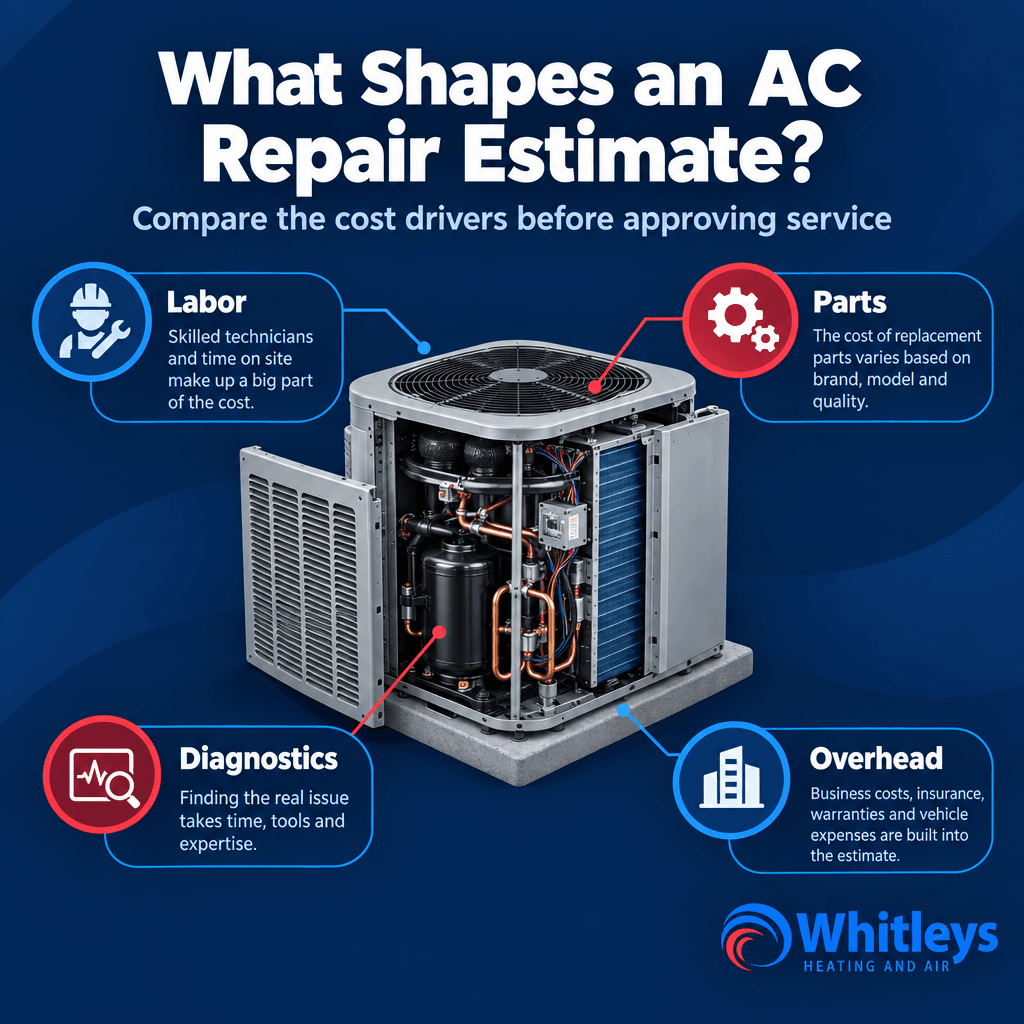
Air-conditioning repair pricing depends on the diagnosed component, labor complexity, equipment access, parts, urgency, and whether the recommended work involves repair, maintenance, or installation. A symptom such as “blowing warm air” does not identify one fixed repair, because several different faults can create the same experience.
Diagnostic or troubleshooting visit: The estimate should explain the observed symptom, testing performed, and next recommended step.
Routine repair: The scope should identify the failed or worn component, parts, labor, and expected timing.
Urgent or after-hours repair: Ask how urgency affects the scope, timing, and estimate, and what safe action to take while waiting.
Larger repair or replacement evaluation: Request a clear comparison of repair, maintenance, and installation-related options based on equipment condition and priorities.
Each category requires a property-specific estimate. Whitley’s Air offers troubleshooting estimates and documents options before repair work begins, so you can ask for the diagnosis, scope of work, parts and labor details, timing, warranty terms if offered, and consequences of delaying.
Why a symptom does not equal a fixed price
The same comfort complaint can result from airflow restrictions, electrical faults, refrigerant problems, drainage issues, controls, or other components. Equipment age, accessibility, part availability, and the urgency of the service can also affect the recommended path, so a responsible estimate follows inspection rather than guessing from a phone description.
Questions that prevent surprise decisions
Ask, “What failed, what caused the symptom, and what is included in this estimate?” Then ask what happens if the work waits, whether the system can operate safely, and whether maintenance or replacement should be considered. Clear answers help you compare the immediate repair with longer-term comfort and reliability priorities.
What should you do after the repair, and when is ongoing maintenance worthwhile?
After service, confirm consistent airflow, verify that the thermostat reaches the selected setting, watch for returning noise or water, and keep the service documentation for future reference. Contact the company for follow-up help if the original symptom returns, one area remains uncomfortable, energy use continues rising, or the system cycles abnormally after service.
Planned maintenance can be worthwhile when performance declines gradually or you want regular attention before a small issue interrupts comfort. Whitley’s ClimateCare 365 program includes proactive maintenance and monitoring, plus priority service for enrolled customers. It is an option to discuss based on your equipment, property, and preference for planned attention.
Confirm the system is operating normally
Give the system time to run through normal cycles and check the rooms that previously felt warm, humid, or poorly supplied. Listen for the return of the original noise and look for new water or ice. Keep the technician’s documentation with your home or business records so future troubleshooting can begin with an accurate history.
Using ClimateCare 365 for planned attention
ClimateCare 365 is designed for proactive maintenance and monitoring, with priority service for enrolled customers. Ask our team whether that approach fits your property and cooling concerns. Northeast Florida homeowners and small business owners can review air-conditioning repair options or contact Whitley’s Air at +19046266675 or service@whitleysair.com about active symptoms, troubleshooting, maintenance, installation, or emergency AC needs.
Frequently Asked Questions
What are the clearest warning signs that an AC system needs professional repair?
Uneven temperatures, rising energy bills, and unusual noises are key warning signs that an AC system may need professional attention. Persistent weak cooling, water, ice, electrical concerns, or repeated shutdowns also warrant evaluation when safe checks do not resolve the issue.
How much does air-conditioning repair cost?
The cost cannot be determined from a symptom alone because diagnosis, parts, labor, access, urgency, and system condition affect the estimate. Whitley’s Air provides troubleshooting estimates and documented options before repair work begins, without relying on an unsupported fixed price.
What is included in professional air-conditioning repair?
Professional service typically includes reviewing symptoms, inspecting accessible equipment, testing operation, identifying the likely cause, explaining options, and completing approved repair work. The exact scope depends on the failed component, so ask what the estimate includes before authorizing service.
Does Whitley’s Air serve Jacksonville, Atlantic Beach, Callahan, and surrounding Northeast Florida areas?
Whitley’s Air’s supplied Northeast Florida scope includes Jacksonville and Atlantic Beach, with service coverage involving Clay, Duval, Nassau, and Saint Johns counties. Additional listed communities include Amelia Island, Anastasia Island, Argyle Forest, and Arlington; contact the team to confirm availability for your exact address.
How do I get started with AC repair or maintenance?
Call +19046266675 or email service@whitleysair.com with the property location, symptoms, urgency, and safe observations. Our team can discuss troubleshooting, repair, maintenance, installation, emergency service, or ClimateCare 365 options based on the situation.