


Another AC repair can restore cooling today, but HVAC replacement deserves serious consideration when repairs keep returning alongside uneven temperatures, rising energy bills, unusual noises, or declining comfort. We recommend comparing the immediate repair with the system’s condition, reliability, and installation requirements before choosing the next step.
How to tell whether another AC repair is buying time or delaying replacement
When a repair bill arrives, compare the short-term fix with the condition and reliability of the entire system. A repair may be sensible when the problem is isolated and the rest of the equipment remains dependable, but repeated failures or persistent comfort problems support a replacement assessment.
Watch for uneven temperatures between rooms, rising energy use, unusual noises, repeated service calls, and an AC system that struggles to maintain the thermostat setting. These signs do not prove that replacement is required, yet they show that another repair should be evaluated in context rather than approved automatically.
Before requesting HVAC installation options, gather recent repair records, utility-bill observations, equipment details, and access to both the indoor and outdoor units. Evaluation is a professional assessment rather than a DIY task, because sizing and installation depend on the property as well as the equipment.
A previous repair price cannot determine replacement value by itself. The estimate may change with equipment capacity, ductwork, electrical needs, accessibility, removal, drainage, and the comfort goals of the home or small business. We recommend asking for documented options that explain both the immediate repair and the longer-term path.
What information should you gather before requesting an HVAC installation estimate?

A useful HVAC installation estimate starts with clear information about symptoms, repair history, property changes, and comfort goals. Find the model and serial numbers if they are available, note the system age if known, identify rooms with comfort issues, and record unusual sounds or changes in energy use.
Record the system’s symptoms and repair history
Write down when the system fails, which rooms become uncomfortable, and whether the issue appears during particular weather or operating cycles. Gather invoices and technician notes from recent air conditioning repair visits, because repeated component problems can change the conversation from one repair to a broader replacement assessment. A concise timeline helps our team understand what has already been addressed.
Prepare the property details that affect the recommendation
Replacement equipment should fit the property, not simply copy the old unit. A professional assessment considers layout, existing ductwork, electrical requirements, drainage, access to the indoor and outdoor equipment, and the comfort goals for each area. Tell us about renovations, additions, insulation changes, or rooms that have always been warmer or cooler.
- Document symptoms: Record comfort problems, sounds, shutdowns, and changes in energy use.
- Gather invoices: Keep recent repair records, equipment information, and any maintenance notes together.
- Note property changes: List renovations, room additions, occupancy changes, or altered use of the space.
- List must-have features: Consider comfort priorities, controls, humidity concerns, and smart thermostat installation.
- Request written options: Ask for the proposed system, included work, assumptions, exclusions, and next steps.
How do you know the estimate is useful? You should be able to review it without guessing what the contractor included. A clear proposal explains the equipment, installation scope, required modifications, assumptions, exclusions, and the decision that comes next.
Which installation factors can change the final replacement cost?
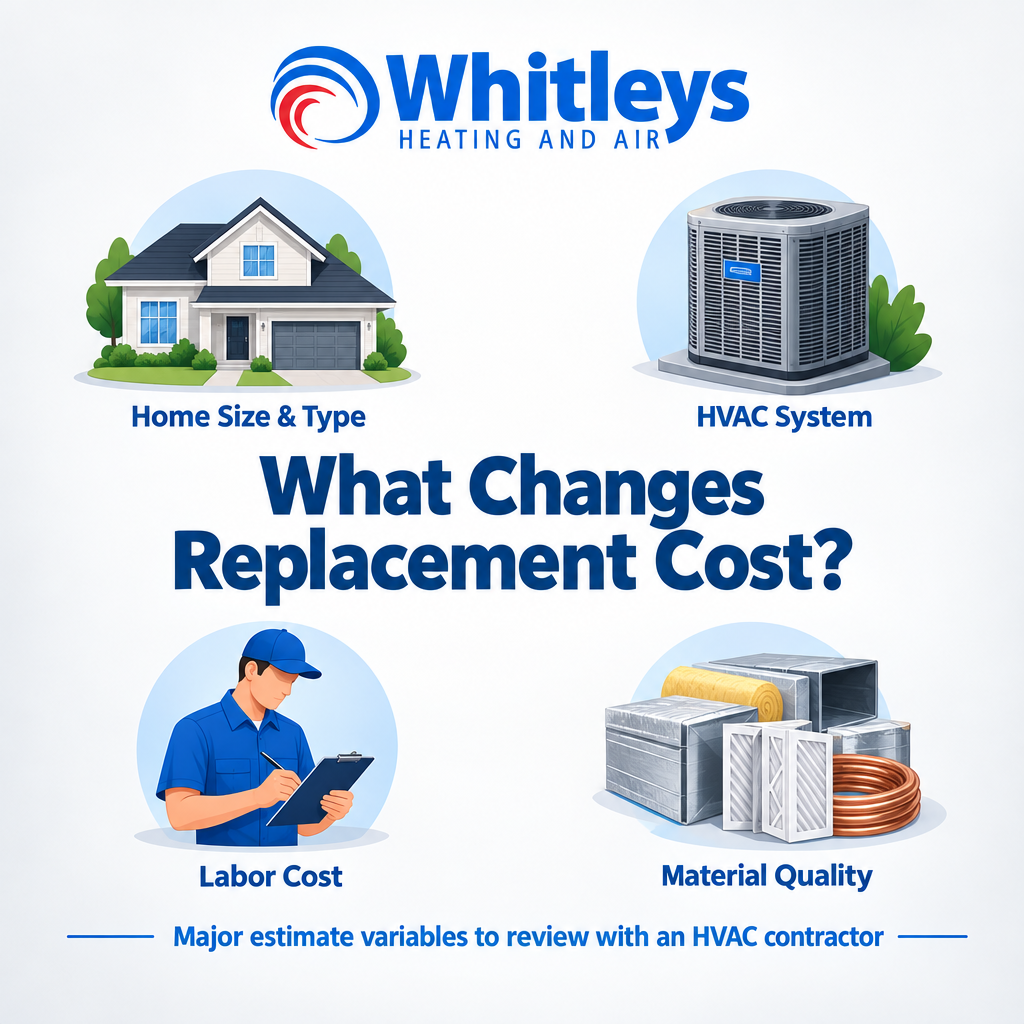
Replacement cost changes with equipment type and capacity, efficiency features, thermostat choices, ductwork condition, electrical or drainage work, removal, access, permits, and labor complexity. We avoid quoting a responsible figure before assessing those variables because two properties with similar AC symptoms can require very different HVAC installation work.
Separate the equipment cost from the installation scope. Ask whether the proposal includes removal of the existing system, delivery and setup, startup testing, cleanup, accessories, and required modifications. A lower equipment figure may not represent a lower project total if important site work appears separately or remains the customer’s responsibility.
Property layout also matters. An accessible replacement in an existing mechanical area may involve different labor from equipment located in a tight attic or difficult outdoor space. Ductwork, electrical service, condensate drainage, and control wiring can influence the recommendation even when the old system appeared to work.
Small business owners should request an assessment suited to the property type. Commercial HVAC installation may involve different load demands, operating schedules, access requirements, and business-disruption concerns than residential HVAC replacement. The right comparison reflects how the building is used, not only the size of the previous unit.
What should a written replacement proposal include before you approve the work?
A written replacement proposal should identify the equipment, capacity, efficiency details, thermostat or controls, labor, removal, startup testing, and any duct, electrical, drainage, or access work. It should also identify what remains the customer’s responsibility so you can compare repair and replacement on equal terms.
Ask what each option is designed to solve and what it does not address. Compare expected reliability, comfort consistency, energy concerns, urgency, and the condition of related components instead of focusing only on the first dollar amount. If you choose a temporary repair, ask how long that approach is expected to serve as a bridge and what warning signs should prompt another call.
Whitley’s Air offers free estimates for air conditioning troubleshooting and documents options and next steps before repair work begins. That process gives homeowners and small business owners information to review before approving work, without assuming that every older system needs immediate replacement.
Our team can also discuss installation services with a comprehensive assessment and tailored recommendations. Ask for the proposed system, included labor, assumptions, exclusions, testing process, cleanup, and any future maintenance considerations in language that decides easier to understand.
When is emergency AC service the right bridge while you plan a replacement?
Emergency AC service is the right bridge when cooling has failed completely, electrical symptoms appear unsafe, severe water leakage threatens the property, or indoor conditions create an immediate concern for occupants or equipment. Protect people and property first, then decide whether a safe repair or replacement assessment is appropriate.
Emergency service and long-term replacement answer different needs. A repair may restore cooling while you review documented HVAC installation options, but the technician should explain what the repair addresses, what limitations remain, and which next steps deserve attention.
Whitley’s Air provides 24/7 emergency HVAC services for heating or cooling system failures. If you need immediate help, use this short triage sequence:
Protect: Move people away from unsafe electrical conditions or active leaks. Shut down: Turn off a malfunctioning system when appropriate and safe. Document: Note sounds, odors, leaks, error displays, and when the failure began. Request service: Contact a qualified HVAC team. Ask: Find out whether repair, replacement, or a separate assessment best fits the situation.
How can Northeast Florida property owners plan for replacement without guessing at the price?
Property owners in Clay County, Duval County, Nassau County, and Saint Johns County should plan around an individual assessment rather than a generic replacement figure. Construction, equipment access, ductwork, comfort needs, and property use can vary across Northeast Florida, including homes and small businesses in Jacksonville, Atlantic Beach, Callahan, and nearby communities.
When reviewing financing, compare the total project scope, payment schedule, approval terms, and conditions supplied by the contractor or financing provider. Flexible payments may help with timing, but the proposal should still make clear what equipment, labor, modifications, removal, and testing are included.
Whitley’s Air offers flexible financing options for HVAC installations, repairs, and upgrades. We can discuss those options alongside the documented scope, while the financing provider determines applicable terms and approval details. Our ClimateCare 365 program is another maintenance and monitoring option to discuss after the system decision, particularly if proactive care fits your property’s needs.
To request an assessment, call Whitley’s Air at 904-626-6675 or email service@whitleysair.com. You can also review emergency AC service options if cooling has failed. We are happy to discuss documented repair and replacement options for customers in Jacksonville, Atlantic Beach, Callahan, and nearby Northeast Florida areas, subject to service availability.
Frequently Asked Questions
How do I know when HVAC replacement makes more sense than another AC repair?
Replacement deserves serious consideration when repairs recur alongside uneven temperatures, rising energy bills, unusual noises, or declining reliability. Review the system’s condition, repair scope, comfort needs, and installation requirements together rather than judging the decision from one repair invoice.
How much does HVAC installation cost in Northeast Florida?
A responsible price requires an assessment because capacity, equipment, ductwork, electrical work, access, removal, and property needs vary. Request a written estimate that separates equipment, labor, modifications, and optional upgrades. Whitley’s Air offers free estimates for air conditioning troubleshooting and flexible financing options for installations, repairs, and upgrades.
What is included in an HVAC installation estimate?
An estimate should identify the proposed equipment, capacity, efficiency details, thermostat or controls, labor, removal, startup testing, cleanup, and any duct, electrical, drainage, or access work. Ask the contractor to identify exclusions, assumptions, customer responsibilities, and next steps before approving the project.
Can I repair my AC now and replace it later?
A repair may serve as a short-term bridge when the system can be safely restored, but ask what the repair addresses and whether other warning signs remain. Whitley’s Air provides 24/7 emergency HVAC services when a cooling failure requires immediate attention, while a later assessment can address replacement planning.