

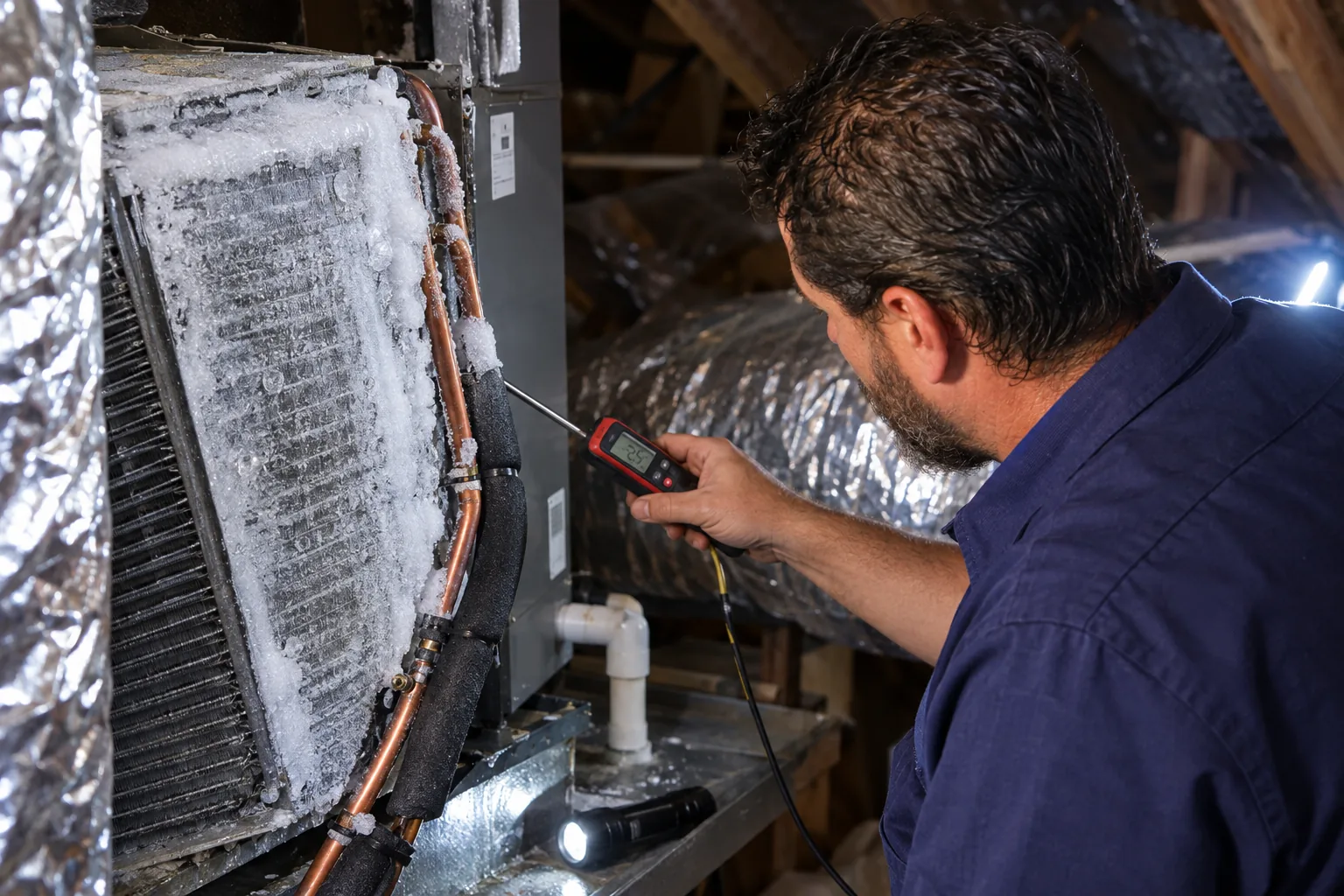
A hot Florida day does not prevent an air conditioner from freezing; restricted airflow, low refrigerant, blower trouble, or an electrical control problem can push the evaporator coil below freezing. Turn off cooling, let the ice thaw, and arrange air-conditioning troubleshooting if the ice returns.
What to do first when you find ice on your air conditioner
Ice on the indoor coil, refrigerant lines, or outdoor unit during a hot Northeast Florida day means the system needs a safe pause before anyone tries to diagnose it. Turn the thermostat from cooling to off. If the indoor blower operates normally and does not make unusual sounds, you may select fan-only mode to help move warm air across the coil while it thaws.
Do not chip, scrape, or pull ice from the equipment. Place towels near the indoor unit or condensate areas if melting water could damage flooring or nearby items. Forcing the system to cool while ice remains can worsen airflow and add strain to the equipment. The first verification checkpoint is simple: the ice should stop growing as the system thaws.
The immediate safety check
Switch cooling off at the thermostat and keep hands, tools, and sharp objects away from the coil and refrigerant lines. If the blower is noisy, weak, or not running, leave the system off rather than forcing fan operation, and protect nearby surfaces from melting water.
What you need and how long thawing may take
A flashlight, a clean replacement filter if needed, and clear access to the return grille and supply vents are enough for basic homeowner checks. Visible ice may take roughly 1 to 3 hours to thaw, depending on how much has formed and the surrounding conditions; wait until it is gone before testing cooling again.
How restricted airflow can make an air conditioner freeze in hot weather
An evaporator coil needs enough warm indoor air moving across it to absorb heat. When airflow drops, the coil can fall below freezing even while outdoor temperatures are high, allowing moisture to turn into ice and restricting airflow even further.
Start with accessible issues: a dirty filter, a blocked return air grille, closed supply registers, furniture pushed against vents, curtains covering registers, or visibly damaged and disconnected ductwork. Replace a filter only when it is accessible, you know the correct size, and you can follow the airflow-direction arrow. An incorrectly installed filter can create another restriction.
- Inspect the filter: Look for heavy dust and confirm that the replacement matches the required size and airflow direction.
- Clear return and supply paths: Move furniture, open supply registers, and remove items covering the return grille.
- Check airflow after thawing: With cooling operating again, compare airflow at several supply vents and listen for unusual blower sounds.
- Stop and request service: Arrange air-conditioning troubleshooting if airflow remains weak or ice returns.
Check the filter, return, and supply vents
A clogged filter or blocked return grille can starve the evaporator coil of warm air, while closed or obstructed supply vents can upset the system’s airflow balance. After the ice has thawed, confirm that return grilles are open and unobstructed, supply registers are open, and curtains or furniture are not blocking them before running cooling again.
Recognize signs of a blower or duct problem
Weak airflow at multiple vents, a blower that starts slowly, unusual humming, or air escaping from visibly damaged ductwork can point beyond a filter issue. Do not open electrical panels or reach into the blower compartment; if airflow stays weak after accessible obstructions are removed, turn the system off and request professional diagnosis.
When low refrigerant or an electrical fault may be behind the ice
Low refrigerant can reduce pressure and temperature at the evaporator coil, allowing ice to form, but visible ice alone cannot confirm a refrigerant leak or prove that the charge is low. Repeated freezing after airflow checks, weak cooling, unusually long cycles, hissing sounds, or ice that returns soon after thawing all justify a professional evaluation.
Electrical and control problems can also affect freezing. A blower motor, fan control, contactor, wiring connection, or thermostat signal may prevent the system from moving air or operating in the correct sequence. Homeowners should not open panels or test live components. Whitleys Heating And Air, LLC provides air-conditioning troubleshooting for airflow, refrigerant problems, and electrical faults, with NATE Certified Technicians able to determine which condition is present.
Clues that point beyond a simple filter issue
If the system freezes again after a correctly installed filter and clear vents, the filter was probably not the complete explanation. Poor cooling, long run times, hissing, water near the indoor unit, or an ice-covered line soon after thawing can indicate a refrigerant, blower, coil, control, or condensate problem that requires testing.
Why refrigerant work requires a trained technician
Refrigerant diagnosis requires more than looking at an iced line because airflow, pressure, temperature, coil condition, and leak location all affect the result. A trained technician can assess the system safely, determine whether a leak or another fault is involved, and recommend the appropriate repair without asking you to handle refrigerant or live electrical equipment.
How a professional diagnoses a frozen Florida AC system
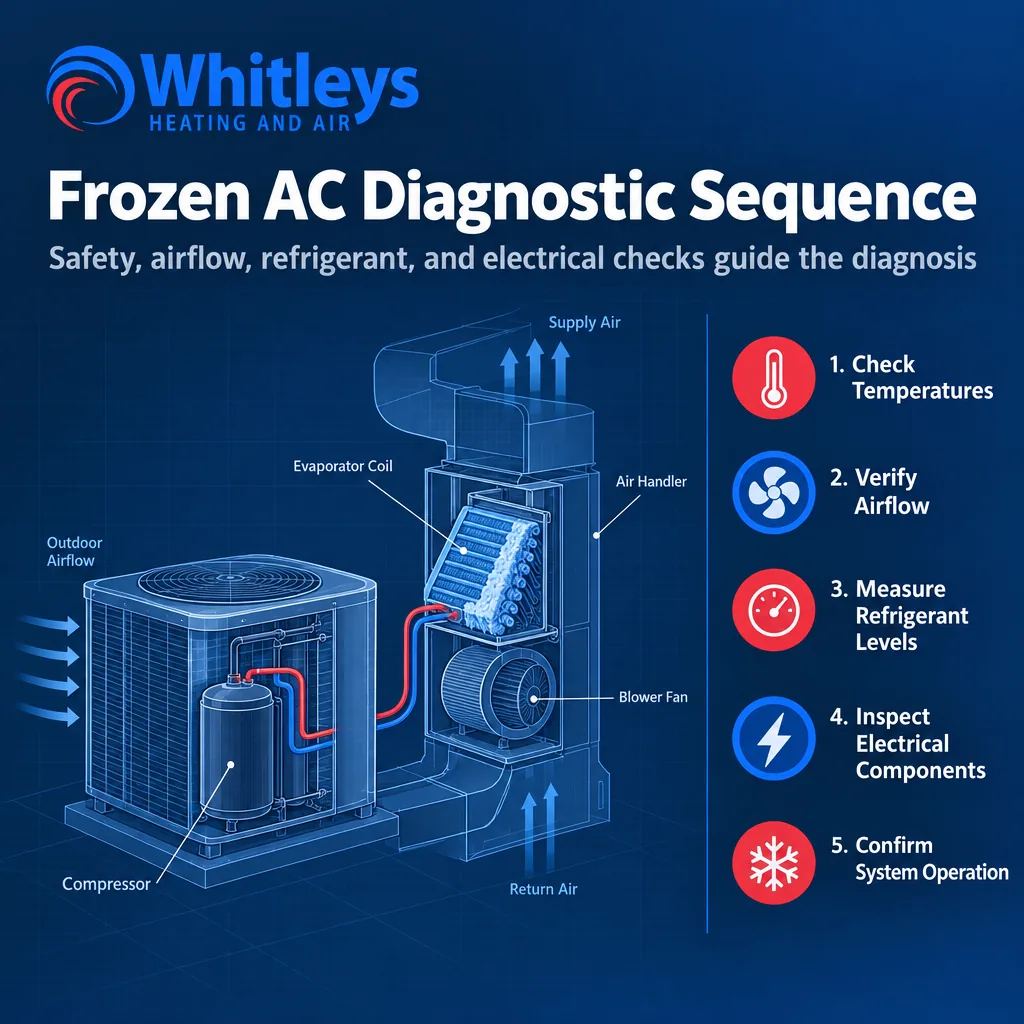
A professional diagnosis starts by confirming when the freezing began, how often it happens, and what the system was doing before the complaint. The technician then inspects the filter, return and supply airflow, blower operation, evaporator coil, condensate drain, and visible ductwork before measuring system performance and checking electrical components.
Refrigerant pressures and temperatures may be part of the evaluation, but adding refrigerant automatically is not a complete diagnosis. Depending on the findings, the repair may involve correcting airflow, repairing or replacing a component, addressing leak-related work, repairing an electrical fault, cleaning the coil, or comparing repair with replacement when the system is older or repeatedly failing.
After the work, verification should include stable airflow, proper condensate drainage, the ability to approach the thermostat setting, and no recurring ice during normal operation. If the system freezes again, report that history rather than continuing to restart it.
What the technician checks first
The first checks usually focus on the conditions that can be confirmed without guesswork: filter installation, airflow at the return and supply vents, blower operation, coil condition, and the condensate path. The technician also reviews the operating history and checks electrical controls so a symptom such as weak airflow is not mistaken for a refrigerant problem.
How the diagnosis guides the repair
The test results determine whether the best path is airflow correction, coil cleaning, a component repair, electrical work, leak-related service, or a broader system recommendation. This approach helps connect the visible ice to its cause and gives you a clearer basis for deciding whether to repair the current system or compare it with installation of a replacement.
What air-conditioning repair may cost and when replacement deserves a comparison
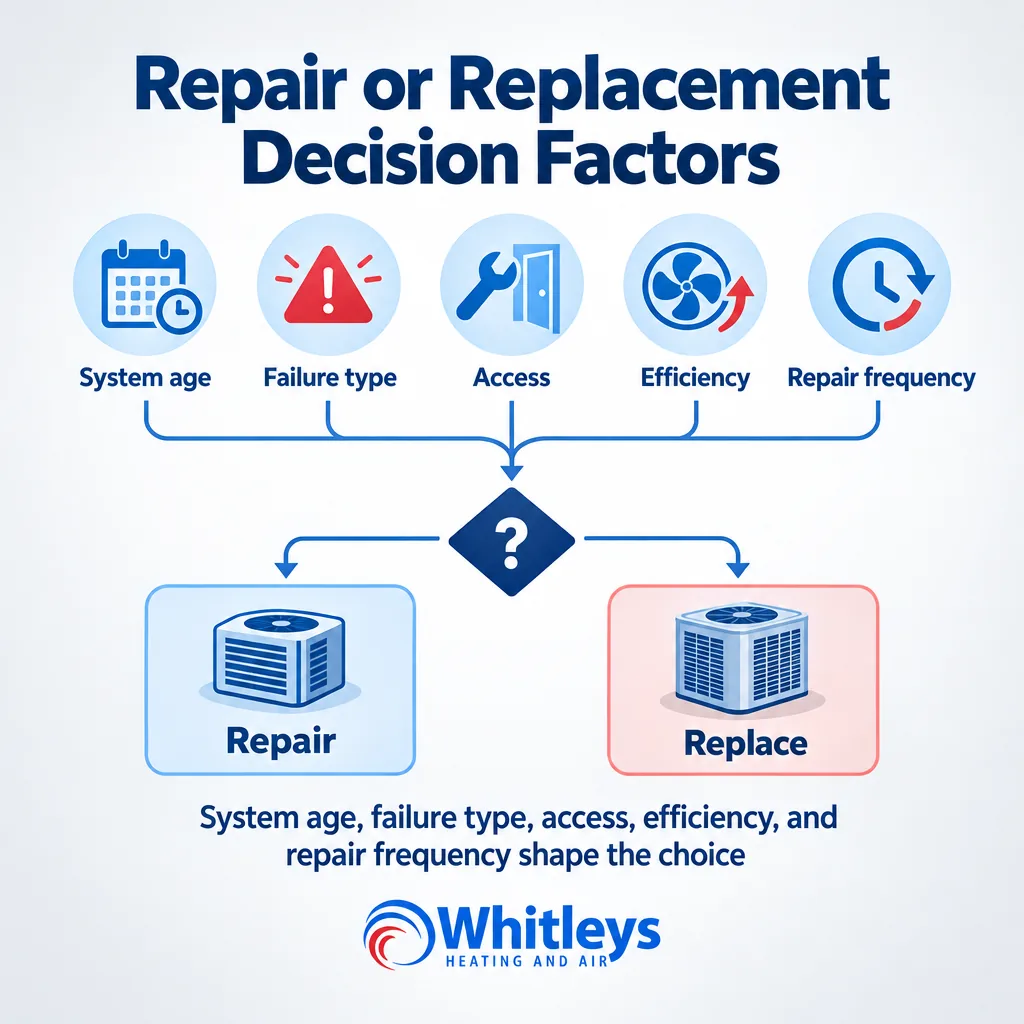
Air-conditioning repair costs vary with the failed component, system condition, access, diagnostic findings, required materials, and whether the visit is urgent. A filter restriction may require a different scope of work than a blower fault, refrigerant leak, electrical repair, or coil problem, so one frozen-coil visit cannot establish a universal price.
When requesting a quote, ask four practical questions: what caused the freeze, which repair is recommended, whether diagnosis and labor are included, and what verification will follow the work. Also ask whether recurring failures, the condition of major components, system age, efficiency expectations, and maintenance history make a repair-versus-replacement comparison sensible.
Whitleys Heating And Air, LLC offers emergency AC repair, air-conditioning maintenance, and AC installation services for local customers. For urgent cooling failures, you can review our emergency AC repair service information and discuss the system’s actual condition with the team.
Why one frozen-coil repair can cost more than another
The price changes with the part involved, how difficult it is to access, whether the system needs cleaning or leak-related work, and whether additional testing identifies a second fault. A clear quote should separate the diagnosed cause from optional recommendations and explain what work is needed to verify stable cooling after the repair.
When urgent service changes the decision
Urgent service matters when the home or small business has no reliable cooling, water from melting ice threatens property, or the system repeatedly shuts down. Emergency service can restore a safe next step, but the repair-versus-replacement decision should still consider system condition, failure history, maintenance, and the expected value of correcting the underlying problem.
How Northeast Florida homeowners can prevent another frozen coil
Prevent another frozen coil by checking the filter regularly, keeping return and supply paths open, watching the condensate drainage area, and calling when airflow becomes weak or cycling changes. Florida humidity and long cooling seasons place sustained demand on residential systems, so a small airflow or performance issue can become more disruptive during hot weather.
Routine air-conditioning maintenance can identify developing restrictions, coil contamination, drainage concerns, and operating problems before a hot afternoon exposes them. Whitleys Heating And Air, LLC also offers ClimateCare 365, a proactive maintenance and monitoring option that includes predictive monitoring and priority service.
Homeowners and small business owners in Jacksonville, Atlantic Beach, Callahan, Clay County, Duval County, Nassau County, or Saint Johns County can contact Whitleys Heating And Air, LLC at 904-626-6675 or service@whitleysair.com for troubleshooting or repair guidance.
A practical maintenance routine
Check the filter on a regular schedule appropriate for your home, keep return grilles and supply vents unobstructed, and look for slow or improper condensate drainage. Pay attention to longer cycles, changing airflow, unusual sounds, or a line that begins icing, because early service can prevent the system from operating repeatedly under restricted conditions.
When to call for service
Call for air-conditioning repair when ice returns after thawing and basic airflow checks, cooling remains weak, the blower does not operate normally, or water threatens nearby surfaces. Our team can help customers in Northeast Florida evaluate whether the next step is troubleshooting, emergency repair, maintenance, or a considered installation comparison.
Frequently Asked Questions
Can an air conditioner freeze when it is hot outside?
Yes, an air conditioner can freeze during hot weather when airflow is restricted, refrigerant conditions are abnormal, or a blower, control, or electrical problem affects operation. Turn off cooling, let the ice thaw, and seek diagnosis if it returns.
What is included in air-conditioning repair for a frozen system?
A professional visit may include inspecting airflow, the filter, blower, coil, condensate path, electrical controls, refrigerant performance, and system operation. The specific repair depends on the failed component and diagnostic findings.
How much does air-conditioning repair cost for a frozen coil?
There is no reliable single price because the total depends on the failed component, system condition, access, materials, and service urgency. Ask for the diagnosed cause, recommended repair, labor details, and any available repair-versus-replacement comparison.
Does Whitleys Heating And Air serve Jacksonville and nearby Northeast Florida areas?
Whitleys Heating And Air, LLC serves local customers in Northeast Florida, including Jacksonville and Atlantic Beach, with listed coverage that includes Clay, Duval, Nassau, and Saint Johns counties. Call 904-626-6675 or email service@whitleysair.com to confirm service for your address, including Callahan.